Pillow Support & Sleep Comfort
How to Choose a Royal-Pedic Pillow for Your Sleep Position
The right pillow should feel comfortable while helping your head and neck rest in a position that feels natural. Sleep posture is a useful starting point, but shoulder width, mattress firmness, pillow fill, and personal preference all influence which loft and firmness may suit you.
A practical guide to comparing pillow support, understanding sleep-position needs, and caring for a pillow so it stays comfortable over time.
Start with the way you sleep most often
Choosing a pillow can seem like a small bedroom decision, until the wrong height leaves you shifting around to get comfortable. A pillow supports the head and neck, and the amount of support that feels right depends in part on how you sleep. Side, back, and stomach positions create different spaces between the head and mattress, so they often call for different pillow lofts.
Loft is the pillow’s height when it is in use. Firmness describes how much it compresses under pressure. These qualities work together, but they are not interchangeable: a pillow can feel soft while remaining relatively tall, or feel firm without being especially high. The aim is not to find one universally “correct” pillow. It is to find a combination that feels supportive for your body and does not force your neck into an uncomfortable angle.
When evaluating Royal-Pedic pillows, consider the same practical questions you would ask about any pillow: What is inside it? How is it constructed? How much does it compress beneath your head? What care does the manufacturer recommend? Product details can help you compare options, but your own sleep position and comfort are essential parts of the decision.
Why loft and firmness matter
Your head has weight, and a pillow gives it a place to rest while filling some of the space between your head and the mattress. If a pillow is too high or too firm for your position, it may hold your head at an angle that feels strained. If it is too low or compresses too much, it may not provide the support you prefer. Either way, you may find yourself changing positions or adjusting the pillow through the night.
Comfortable alignment is a useful guide rather than a rigid rule. When lying down, notice whether your head feels tipped upward, dropped toward the mattress, or comfortably in line with the rest of your body. Pay attention to what happens after the pillow has compressed under your weight; its height on a store shelf or in product specifications may not reflect its loft in actual use.
Firmness also affects how a pillow behaves. A more compressible fill may settle substantially once your head rests on it. A more resilient construction may retain more of its height. Neither trait is automatically better. What matters is how the pillow supports you in your usual position and whether the feel remains comfortable throughout the night.
Pillow considerations for side sleepers
Side sleeping leaves a gap between the mattress and the side of the head. The width of that gap varies with shoulder width, the shape of the upper body, and how deeply the shoulder settles into the mattress. As a result, many side sleepers find that a pillow with enough loft to fill the space feels more comfortable than a very low pillow.
Shoulder width is particularly useful to consider when comparing pillow height. A broader shoulder may create a larger space to bridge, while a narrower frame may require less height. Mattress firmness matters, too. On a firmer mattress, the shoulder may not sink as deeply, which can leave more space between the mattress and head. A softer surface may allow greater shoulder sink, reducing the gap. These are general tendencies, not fixed formulas, so check your own position rather than relying on a label alone.
Try to notice whether your head seems to be pushed away from the mattress or whether it drops down toward it. A pillow that is too lofty for your body or mattress may feel as if it is crowding the side of your head. One that is too low may leave you feeling unsupported. A pillow with a comfortable balance should allow your head to rest without requiring you to hunch your shoulder or curl your neck to make up for the height.
Side sleepers who change sides during the night can also think about how consistently a pillow holds its shape. If a pillow’s fill shifts or compresses unevenly, the support may feel different from one side to the other. Construction and fill details can help set expectations, while a trial period, when available, gives you a chance to judge the pillow in your usual routine.
Pillow considerations for back sleepers
Back sleepers generally need a pillow that supports the head without lifting it excessively. A pillow that is too tall may bring the chin toward the chest; a pillow that is too flat may allow the head to fall back farther than feels comfortable. The middle ground will differ according to the person and the mattress.
Consider the way your shoulders and upper back settle into the bed. A mattress that lets the upper body sink more deeply may change the space the pillow needs to fill. Your usual posture matters as well: some back sleepers rest with their head fairly level, while others prefer a little more cushioning beneath it. The best choice is the one that feels supportive rather than forced.
When testing a pillow on your back, settle into your typical position instead of holding yourself unusually upright. Give the fill time to compress, then notice whether your neck feels relaxed and whether you can breathe and turn your head naturally. If you repeatedly fold, bunch, or remove the pillow during the night, that may be a sign that its height or feel does not match your preference.
Pillow considerations for stomach sleepers
Stomach sleeping often places the head turned to one side. Because the head is already rotated, many stomach sleepers prefer a lower, more compressible pillow rather than a lofty one. A tall pillow can raise the head and may make the sleeping position feel more pronounced.
Comfort remains personal: some stomach sleepers prefer little or no pillow beneath the head, while others like a thin layer of cushioning. If you sleep partly on your stomach and partly on your side, you may need to balance the lower height that feels comfortable in one position against the added support that may suit the other. Tracking your usual position for a few nights can help clarify which one deserves priority.
It is also worth remembering that sleep positions can change. A pillow that feels suitable when you first lie down may not feel the same after you roll onto your side. A pillow’s ability to compress, recover, or be adjusted may matter more when your posture varies overnight.
How mattress firmness and body shape affect pillow loft
A pillow is not chosen in isolation. The mattress beneath you changes how your body settles, which in turn affects the distance between your head and the bed. Two people using the same pillow may experience different loft because their shoulders, necks, and mattress surfaces behave differently under pressure.
Think about the mattress you actually sleep on, not just its advertised feel. If your shoulder sinks noticeably, the pillow may need to bridge a smaller gap than it would on a firmer surface. If your shoulder stays higher, a different amount of loft may feel more appropriate. Shoulder width and body proportions add another layer: they affect the space a side sleeper needs to fill, but they can also influence how a pillow feels in other positions.
When assessing a pillow, test it with your usual mattress and, if possible, your normal bedding. A pillow may feel different on a showroom surface, guest bed, or floor than it does on the bed you use every night. A careful comparison at home is often more informative than judging by the pillow’s appearance or listed dimensions.
Look at fill, construction, and care details
Royal-Pedic pillows should be assessed through their stated materials and construction, rather than by brand name alone. Check the product description for the type of fill, the pillow’s design, and any guidance about its feel or intended use. These details can help you anticipate whether it may be more yielding, resilient, adjustable, or shape-retaining. If information about loft or firmness is not clear, consult the seller or manufacturer before deciding.
Fill affects how a pillow compresses and how readily it returns to shape. Construction can influence whether the contents move freely, stay in distinct sections, or provide a more uniform surface. The cover matters too: its fabric and finish affect the feel against your face and may influence how the pillow is maintained. Read the care label before washing, spot treating, or applying heat, because different fills may require different methods.
It can be tempting to treat thread count, weight, or a single product label as a shortcut to comfort. Those details do not replace an understanding of support. A pillow’s performance depends on the interaction between its fill, construction, your body, your mattress, and your sleep posture. Focus on the complete description and your own experience, not one specification in isolation.
A simple at-home pillow assessment
Use a few quiet minutes before bed to check whether a pillow seems compatible with your position. The following steps are a practical way to organize your observations:
- Begin in your usual position. Lie down as you normally would, rather than adjusting your posture to suit the pillow.
- Let the pillow settle. Give the fill a moment to compress under your head, then notice the support it provides.
- Check the angle. Ask whether your head feels tipped up, dropped down, or comfortably supported.
- Notice pressure and ease. Pay attention to whether you feel compelled to bunch the pillow, add another one, or move your shoulder to get comfortable.
- Repeat for other positions. If you change positions during the night, compare how the pillow feels in each one.
- Keep brief notes. Record your position, the pillow’s feel, and any adjustments you make over several nights.
A short trial may reveal a pattern that is easy to miss after a single night. Note whether discomfort appears only in one position, whether the pillow loses height, or whether your mattress seems to affect the fit. If you have persistent pain, numbness, or other concerning symptoms, seek guidance from a qualified health professional rather than assuming a pillow change will address the cause.
Keep pillowcases comfortable and easy to care for
A pillowcase does not determine the pillow’s support, but it shapes the surface you sleep against and helps protect the pillow from everyday soil. Choose a case that fits without pulling tightly over the pillow or leaving excess fabric bunched under your face. A close, comfortable fit can also make it easier to judge the pillow itself.
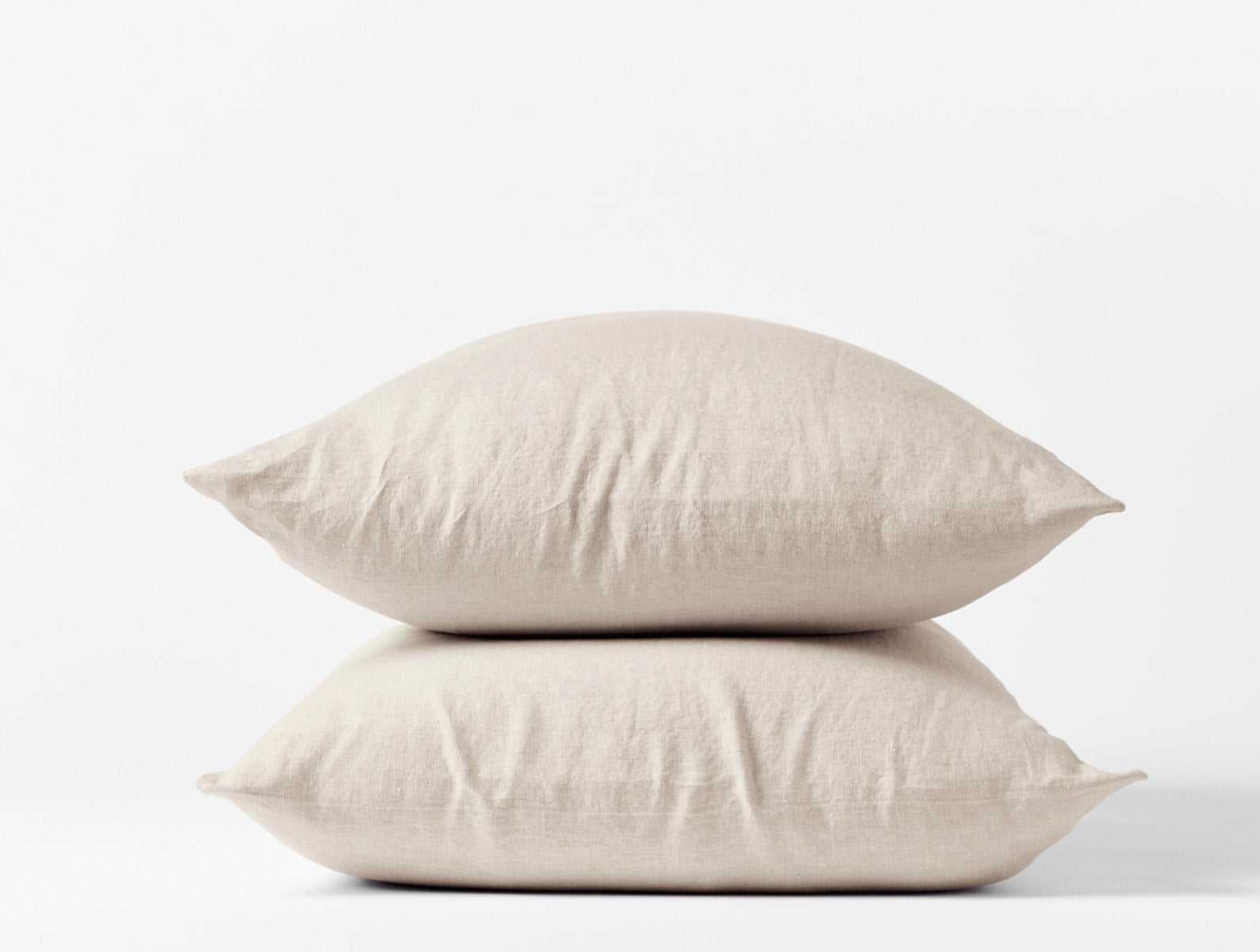
For example, Organic Relaxed Linen Pillowcases are made from organic flax linen, with pick-stitched cuffs and a plant-based softener finish. Their care instructions recommend a cold, gentle wash with like colors, tumble drying on low, and removing them promptly; warm ironing is optional. Those details are relevant if you prefer linen against your skin, but a pillowcase is not a substitute for choosing a pillow with a suitable loft and support.
Wash pillowcases regularly according to their care labels, and make sure they are fully dry before putting them back on the bed. For the pillow itself, follow its manufacturer’s instructions. Some pillows may be washable; others may need spot cleaning or airing only. Avoid assuming that a removable cover means the inner fill can be washed in the same way.
A low-effort routine for maintaining a pillow
Regular, gentle care can help keep a pillow feeling fresher and make it easier to spot changes in its support. Start with the care guidance provided for the specific pillow, since fill materials and construction vary. If airing is permitted, let the pillow breathe in a dry, well-ventilated space when you change the bedding. Avoid prolonged exposure to direct heat or sunlight unless the manufacturer says it is appropriate.
Use a pillow protector if recommended and compatible with the pillow, and wash it according to its own label. A protector can limit everyday contact with moisture and soil, while a clean pillowcase provides the regular washable layer closest to your face. Together, these habits can reduce the need to clean the pillow itself more often than its care instructions allow.
Every so often, notice whether the pillow still feels like it did when you first chose it. Has it become lumpy, flattened, uneven, or slow to recover? Does it take more adjustment to feel comfortable? A change in feel does not automatically mean the pillow must be replaced on a specific schedule, but persistent loss of support is a reason to review its condition and the manufacturer’s recommendations.
Common pillow-selection missteps
- Choosing by sleep position alone. Position is a useful starting point, but shoulder width, mattress firmness, fill, and individual preference all matter.
- Confusing firmness with height. A firm pillow is not necessarily tall, and a soft pillow is not necessarily low. Consider how both feel under your head.
- Judging a pillow before it settles. A pillow’s uncompressed shape may not reflect the loft it provides during sleep.
- Expecting a pillow to fix every source of discomfort. Persistent or severe symptoms may have causes beyond bedding and warrant professional advice.
- Ignoring care instructions. Washing or drying a pillow incorrectly can affect its materials and shape. Check the label first.
Frequently asked questions
What pillow loft is best for side sleeping?
There is no single loft that suits every side sleeper. Shoulder width, mattress firmness, and how much the shoulder sinks into the bed influence the space a pillow needs to fill. Look for a height that feels supportive without pushing your head away from the mattress or letting it fall toward it.
Do back sleepers need a firm pillow?
Not necessarily. Firmness is a matter of preference, and the pillow’s height and compression also affect support. A back sleeper may prefer a pillow that holds its shape or one that gives more readily. Judge it in your normal position and consider whether your head feels comfortably supported.
Should stomach sleepers use a low pillow?
Many stomach sleepers prefer a lower, more compressible pillow, but comfort varies. If you alternate between stomach and side sleeping, take both positions into account and consider which one you use most often.
How do I know whether a pillow is too high?
Notice whether your head feels propped up or whether you repeatedly shift, fold, or remove the pillow. Your comfort in your usual position is the most helpful guide. If you have ongoing pain or other symptoms, consult a qualified professional.
How often should a pillow be aired or washed?
Follow the specific care instructions for your pillow. Some types can be washed, while others may require spot cleaning or airing only. Pillowcases and protectors generally have their own separate washing guidance, which should also be followed.
Choose for comfort, then care for it consistently
The best way to choose a Royal-Pedic pillow is to treat sleep position as a starting point, not a complete answer. Side sleepers often need enough loft to bridge the space created by the shoulder; back sleepers may prefer a moderate profile that supports without lifting the head too much; and stomach sleepers frequently look for a lower, more compressible feel. In every case, mattress firmness, body shape, and personal comfort influence the result.
Compare fill, construction, and care details, then give yourself time to observe how a pillow behaves in your real sleep routine. A comfortable pillow should feel natural in your usual position and remain manageable to maintain. Small, consistent care habits—and a pillowcase that suits your preferences—can help keep the bed feeling fresh while you decide what support works for you.